April 2010

It has been several months since I wrote the earlier posts and more than a year since Percy died, but still I couldn’t bring myself to write this post for April, T.S. Eliot’s cruelest month and the month Percy left us.

In a strange coincidence, I learned as I was looking up “The Wasteland” to quote a section for Percy’s memorial card that the title alludes to the story of the Fisher King. This king, in the legend of the Holy Grail, is wounded; as a result of his wounds his lands  become a wasteland, and in many versions he (and his lands) are healed by the grail recovered by Percival, who is usually recognized as the purest of the knights of the Round Table. Little Percy was named for him.

April 2010 began with some lovely mild weather and the outdoor furniture began optimistically to get into position. Percy had had a seizure March 29, still keeping to the seizures every week or ten days, but as the month turned he seemed in good form, ravenous as ever, and midweek found me cooking up the weekly batch of his diet early one evening as the dogs roamed outside. Once I’d mixed it up and put it away in containers I set the mixing bowls outside for the dogs to lick; this was a big treat. This was the last moment of calm and contentment I remember before the decline of Percy’s last two weeks.

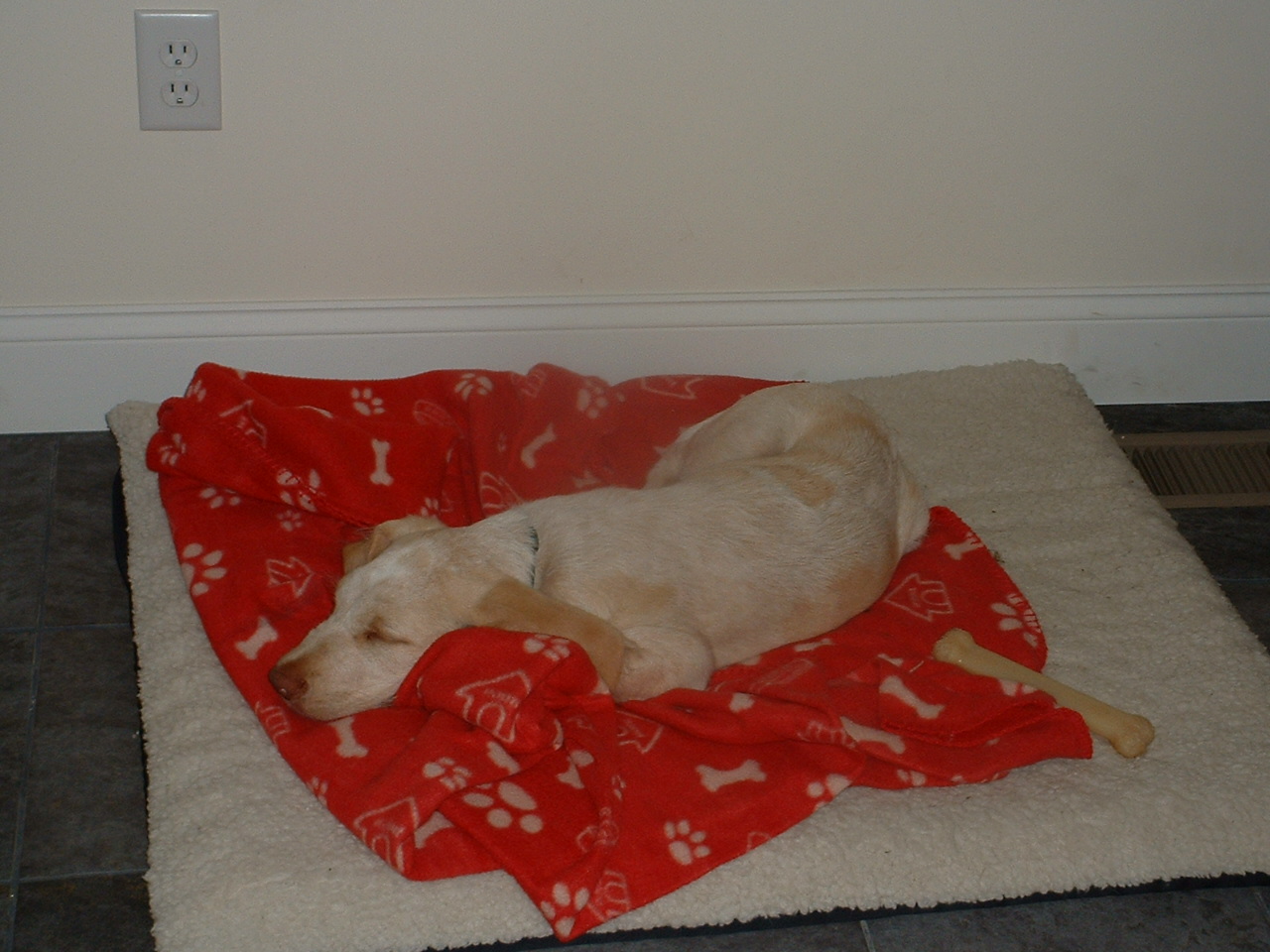
Easter fell the first weekend of April that year. Beginning around 2 a.m. Easter Sunday, Percy had a series of three seizures; this was the worst he had ever been. He had barely recovered from the first and I was sitting with him when the second struck. When it passed and he was trying to move around, stumbling and agitated, I carried him outside, as I felt that he was best outside and maybe could avert a third seizure there– he had never had a seizure outside. But he did now, his third, and I was holding him shaking out in the grass, wondering if this was how he was going to die. After the seizure finally passed I got him back inside and took him to my son’s room on the first floor; it was now around 3:30 or 4. I wrapped him up and lay next to him; Nocci came in and lay nearby and we all slept– me fitfully– for a few hours.

I was up early to get breakfast for our houseguests, leaving Percy asleep, which was unusual. But soon he came trotting out to the kitchen, and to look at him one would never have guessed the horrible night he’d just had. I looked at him in disbelief. Perhaps this would be like the period in December when the seizures accelerated just before Christmas and I feared it was the end, but then he rallied and came back by the New Year. I hoped.

But now, within a few days I saw that his appetite was flagging, and this was the first time he’d lost his appetite, especially since he’d begun the phenobarbital. I began to grow really concerned. By the weekend I was coaxing him to eat bits of special foods, the most delicious tidbits I could think of, as he would not even bother with his food dish. I felt him wasting away in front of me. I had to laugh though, to see him continue to graze on rabbit droppings outside. When all else failed, he still seemed to want to eat those.

The weekend after Easter I traveled to my parents’ for a sister’s birthday and Percy enjoyed the change of scene, but his appetite did not improve. We returned home and the weather remained relatively mild, but I kept him in his little polartec coat outside as his weight loss left him shivering. By Tuesday, though, he was spending most of his time outside curled up in a tight ball, and for some reason he seemed to seek out the chilly, shady areas, and he was going off by himself. There was no doubt what was happening. I took him to the clinic for a final round of bloodwork on Wednesday, just to confirm.

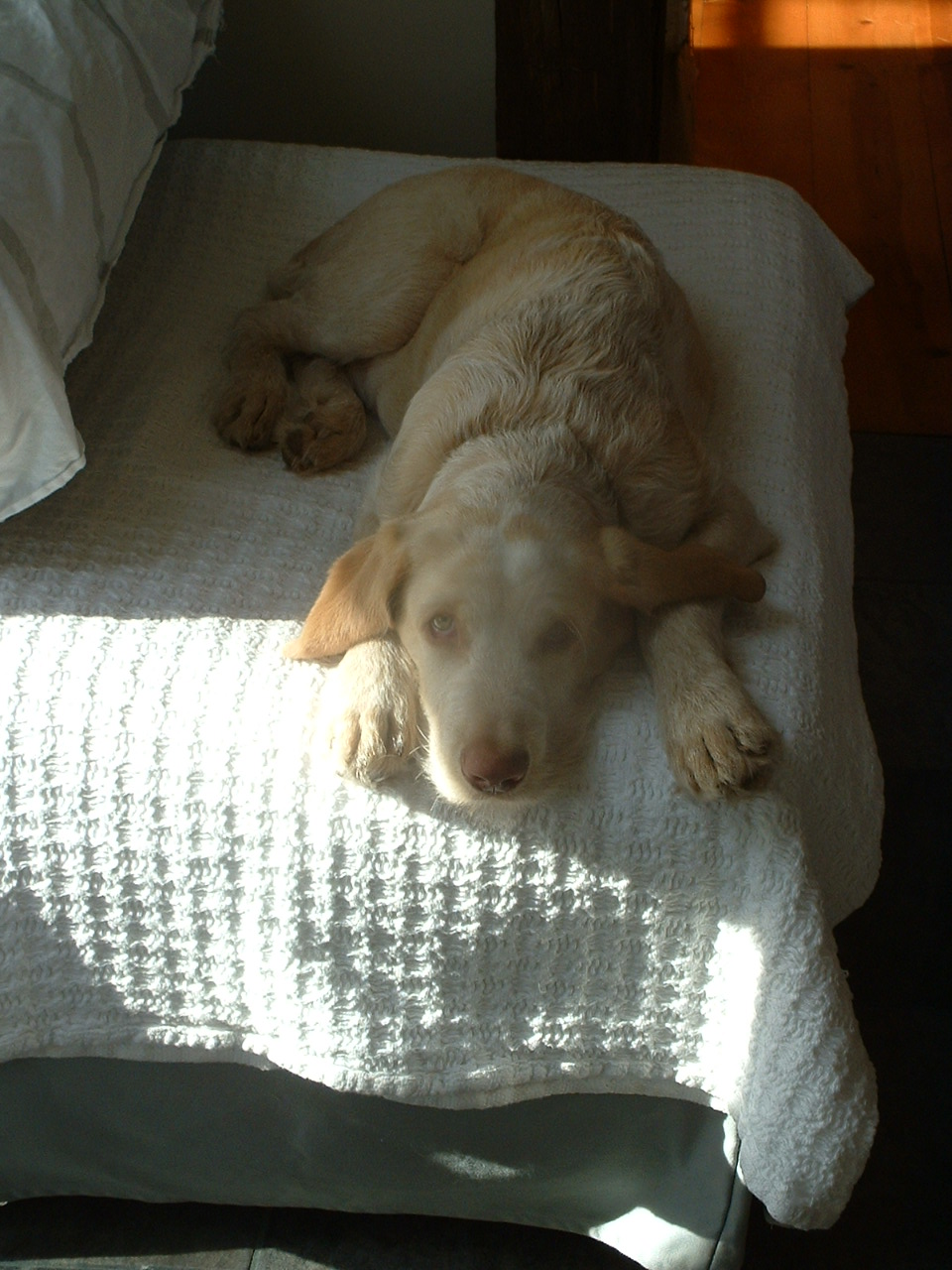
Thursday April 15 was a pretty spring day that we spent mostly outside in the sun; my son was able to get home from college that afternoon, and our vet came in the evening to euthanize Percy, who lay in one of his favorite spots, on top of the big ottoman in the kitchen. He used to lie there and keep an eye on me as I made dinner. His beautiful eyes flickered open and closed after the first injection, but then he was as if sleeping; he died so quickly and without a movement or sound that it seemed he was just waiting to go, perhaps to know that it was ok.

I had told him that day what was happening and let him know that he would be ok, and so would we. He had lost about 5 pounds the last ten days and seemed so small and skinny, and as heartbroken as I was, I could only be glad he was not suffering anymore. From 3 1/2 months to 10 1/2 months, he had been sick, and we knew he would not live very long. But though it was all too short and marked by illness and seizures, Percy seemed to enjoy his life. And he was loved.

April 14: BUN 208, creatinine 6.8, phosphorus 13.5
November – December 2009

While October had just seemed an unreal series of events, especially after mid-month November began to be more real. Though Percy still seemed healthy and active, I began to see slight differences: he did sleep a little more, perhaps, than what I remembered our other puppies doing. There were moments or days where something seemed a little off. But I hoped I was just looking too hard.

Then, after a respite of almost exactly two months, he had his third seizure, late in the evening of November 18. Then his fourth, around 3 a.m. November 22. Those in the middle of the night were surely the worst– perhaps for Percy, robbing him of rest, but certainly for me, coming up from whatever stage of sleep to the sound of Percy’s howl as he began the seizure was pretty horrific. I began to feel the exhaustion of the months I was a new mother with middle-of-the-night feedings, 20 years earlier, but now rather than nurturing my son into life I was watching my puppy die. All I could do when Percy seized was to witness it: I held him as I could without wanting to get in the way of his body movements, and I always spoke to him, wanting to believe my voice somehow made a difference. The seizures lasted perhaps two minutes, and then Percy would come back, and try to get up, but stumbling crazily he would crash into things and fall over. He did not want to be contained or restrained, though, and I did not want to increase his agitation and possibly provoke another seizure. In those first months he consistently urinated during the seizures so I would change his bedding and try to clean his fur– he didn’t like this– and hold him until he would settle again into sleep. And I would eventually drift off myself, wondering when the next one was going to strike.

A few times Nocci’s behavior told me a seizure was coming: once I woke in the middle of the night to see him pacing anxiously, and within a few minutes Percy seized. This was not consistent, and as time passed I wondered if Nocci sort of turned this off; he too wanted some state of grace, to be in denial and if he didn’t predict what he felt was about to happen, maybe it wouldn’t happen. But that of course is my human analysis, and I can’t know.

From those two November seizures there was a lull of just over three weeks. The lulls allowed me to think that maybe things were getting better, or at least that they wouldn’t get much worse. Our vet had advised thinking of starting Percy on phenobarbital, before the seizures became so frequent and/or severe as to become a determining factor beyond the JRD. But knowing the possible marked side effects, unpleasant especially for such a young dog– lethargy, dullness– I resisted making that step.

In the meantime, Percy was also having digestive issues– he ate well but his stools were consistently extremely loose– like liquid– and voluminous to a point that I wondered if he was absorbing any nutrients. In November, I consulted a holistic vet who practices alternative as well as traditional medicine, and among other supplements we started Percy on powdered colostrum, which healed his digestion almost immediately. Following more bloodwork she also thought Percy could benefit from adrenal cortex injections. I was under no illusion that anything we could do would make his disease go away but I wanted to make his life, what he would have of it, better– more comfortable, more normal, if possible. So I began the injections.  Around mid-December the holistic vet also recommended giving Percy fluids through an IV over several days to help his system beyond what his kidneys were unable to do; we began the series. But after the second day Percy had what was now the fifth seizure of his life, December 16; the following night he had another, the first time he had seized on subsequent days, so I ceased the IV flushes. Though there was no way to know if there was a correlation, and logic said giving him the fluids could only help his system by giving his very weak kidneys a rest rather than overload him in any way, I’d become suspicious of everything. I also stopped the adrenal cortex injections.

Percy had the last of this series of seizures December 18. I remember going to get our Christmas tree the following day with one eye on him continually, as there were multiple moments he seemed about to seize. But he didn’t. He was very weak that weekend, not himself– he mostly slept and had none of the puppy energy left, at all. He would go off to the other side of the house to sleep, whether to be alone or because he was hypersensitive to noise and light. But I would continually go to check him, as his going off by himself to sleep could presage a seizure. I feared he would not make it to Christmas. But after a few days he rallied. I continued  to resist beginning the phenobarbital– illogically, it may seem in retrospect, but I simply didn’t want to subject him to anything worse than what he had been born with and had to contend with daily. But he seized twice more before the month’s end, and I realized couldn’t ignore that the seizures had to be treated.


November 12 BUN 152, creatinine 4.5, phosphorus 9.8

December 15 BUN 125, creatinine 5.0, phosphorus 13.2

October 2009: diagnosis

It was the second week of October that he had the ultrasound, and the confirmation of the disease was all too visible on the screen. His kidneys were almost not there: there was water where there should have been mass. Seeing this and hearing it described was like a death sentence being handed to me for my adorable four-month old pup. I remember holding him in my lap and simply trying to hold myself together: I don’t cry in public but I could feel everything retract inside me into a protective mode, protective of him, of me. But there was no protection to be had. He would die from lack of kidneys, and all we could do would be to manage his diet and give him supplements to help what little kidneys he had do the job they were meant to do. It would only buy a little time.

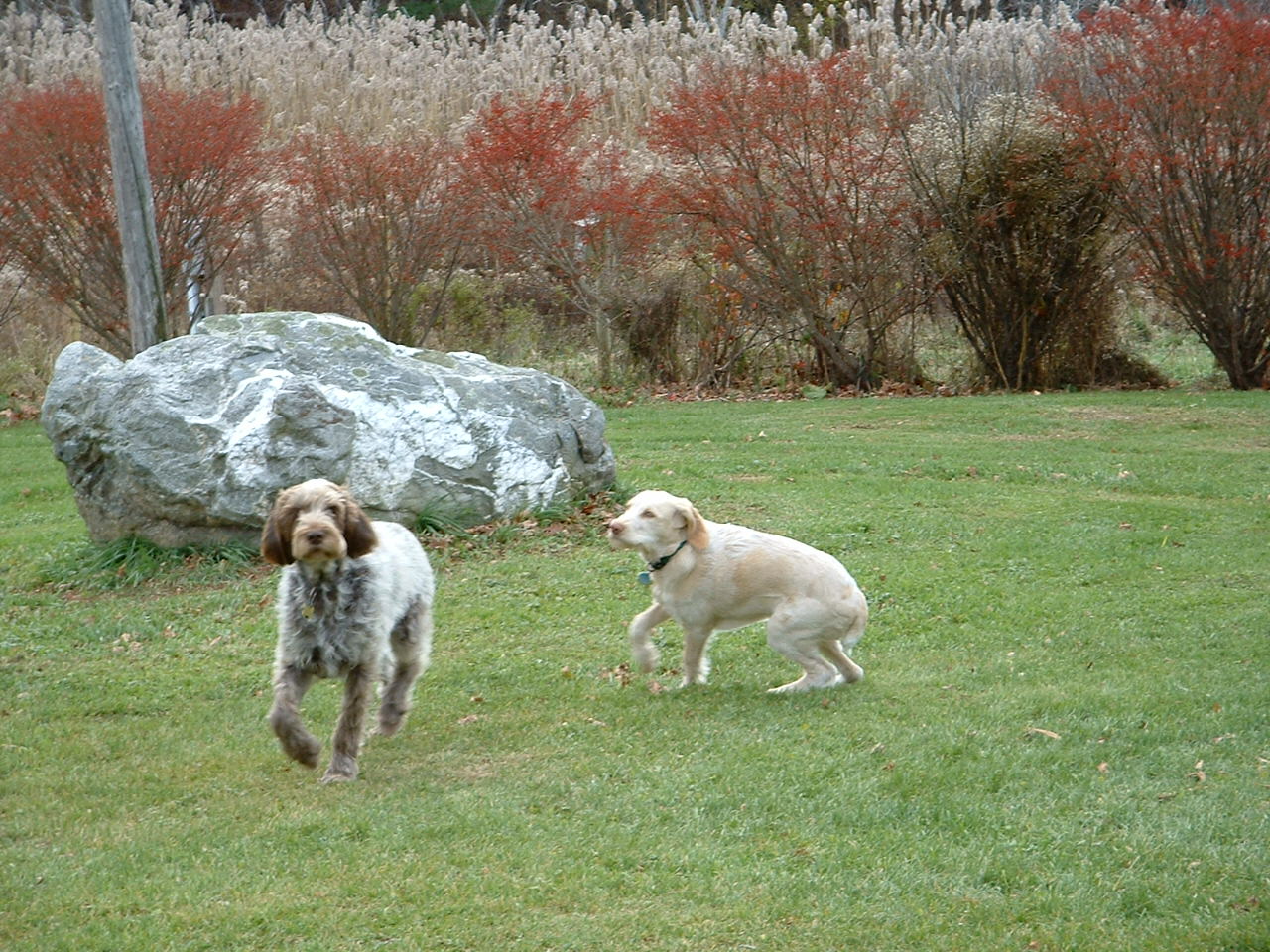
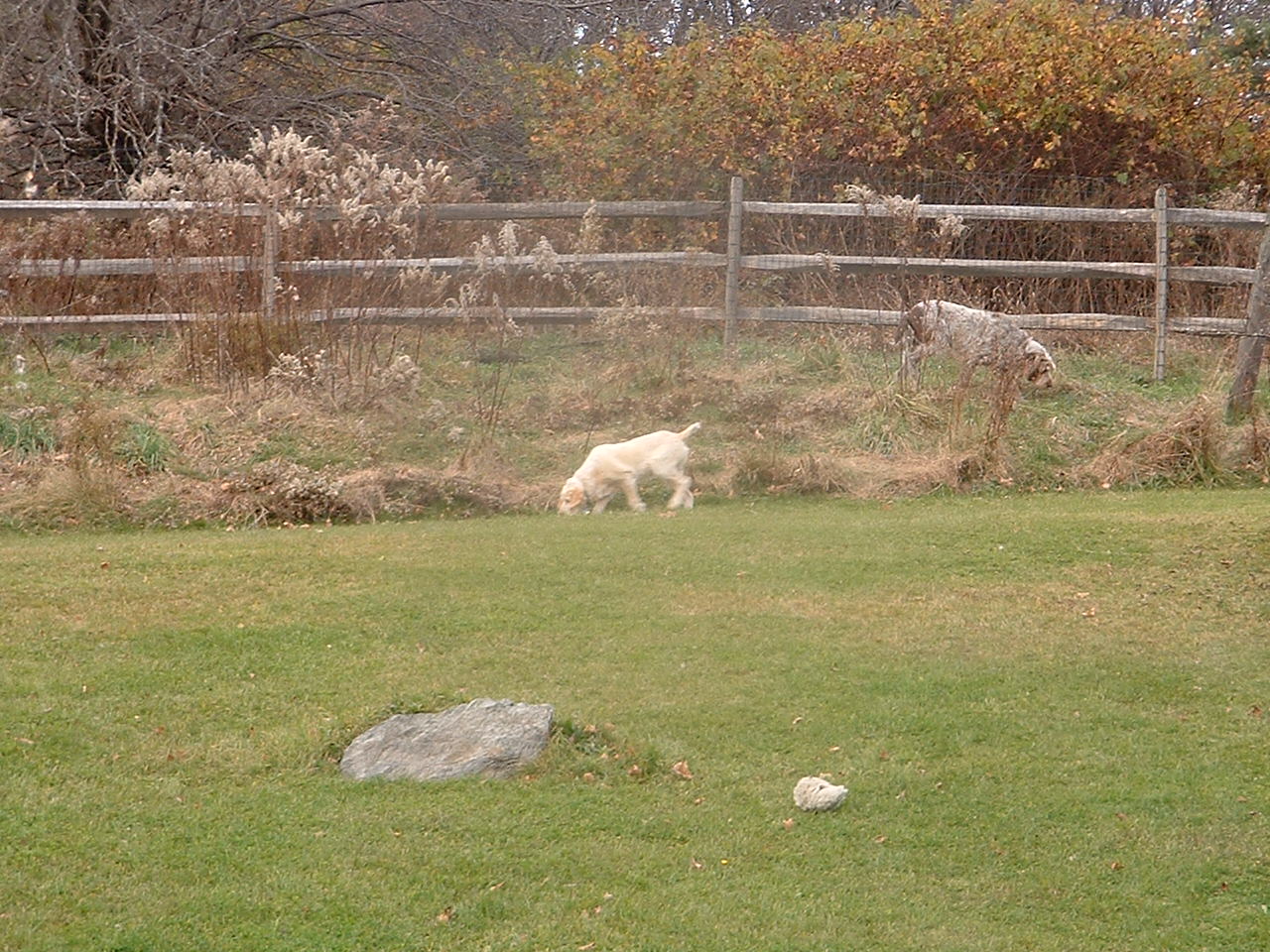
Yet he seemed like a puppy of that age would, playful with a good appetite, eating rabbit droppings in the yard with gusto. He and Nocci could graze for hours on them. Since the second seizure in September there had been no more, so I just sort of held my breath, knowing it was only a matter of time before things started to look worse.

Percy’s initial treatment consisted of a low-protein diet with supplements serving to bind phosphates and reduce blood toxins, as well as additional supplements for general health and to address the ancillary issues affecting him. Please see the treatment posts for details.


November 6 BUN 128, creatinine 3.4, phosphorus 11.2. In addition his sodium to potassium ratio had dropped from 27 in September (the low end of normal) to 23, just below normal. As a result the following week we did a test for Cushing’s, just in case, but it was negative.


One number would rise, another would go down, but they did not improve significantly.

September 2009: first seizures

As I describe in Percy’s World, the first sign that anything was amiss with Percy was an epileptic-like seizure he suffered early in the evening of September 15. He was exactly three and a half months old. I brought him in for bloodwork the 17th and by the 19th we knew his kidney functions were very abnormal. The following day, a Sunday, Percy suffered a second seizure, again in the evening while he was napping. It was never clear if the seizures were caused by the imbalance in his system due to the kidney disease, or if it could be a separate idiopathic epilepsy. But in terms of his kidneys, the next step was to do an ultrasound to see their morphology. Short of doing a biopsy of the kidney tissue this would give the most comprehensive diagnosis.

There was a delay of several weeks until the ultrasound was done, and in that time I was just in a state of suspended shock about Percy. The numbers could not lie, and they were so dramatically off as to be incontestably bad. But Percy, except for the two seizures, still seemed pretty normal– though I of course began to watch him more closely. Was he somewhat less active than our other pups had been? Was he really drinking more? He was gaining weight and growing the typical Spinone beard. Who could believe this bundle of sweet energy would have a severely limited lifespan?

Towards the end of the month I found drops of blood here and there on the floor and where Percy slept. I looked him over and found nothing external. Then I looked in his mouth, and found what appeared to be an ulcerated abscess on his left upper gum. It was red, inflamed, and bleeding just a little. Though I did not see any foreign body protruding, this was a not-yet four-month old puppy, so I thought he must have chewed a stick or something of that sort and a piece had gotten lodged in his gum. Of course, this was a weekend. Percy did not seem feverish or especially bothered by it, but given everything else that was going on it needed attention. I brought him to the clinic the next day but nothing beyond the ulcer was apparent, so we began a round of Clavamox. The ulcer healed, but a few months later there would be a reappearance.

September 17 Bloodwork results showing abnormal kidney functions: BUN 120, creatinine 3.3, phosphorus 11.6. Normal levels are considered within a range of 7-27 for BUN, .4-1.8 for creatinine , and 2.2-6.3 for phosphorus.

Percy’s World

It was just over a year ago, December 2009, that Percy began to get much worse. His seizures were accelerating–  from once every few weeks, just before Christmas they began to occur several times a week, eventually accelerating to more than one a day.  They increasingly left him weak, tired, and disoriented, beyond what the dysplasia was doing to him. He was not yet seven months old; at not quite 50 lbs., he remained much smaller than his littermates who had mostly all passed 70 by the new year. With the diagnosis in October I knew his life was surely limited but the reality of it did not sink in until he began to seem truly ill. But, let me go back to the beginning.

Percy seemed like a normal, active, happy, adorable puppy when he came home end July 2009. He joined our older Spinone Nocci, then five, who did not know what to make of this whirling dervish. We had lost Fermat eight months earlier; Nocci had known and looked to Fermat from the day he himself came home as a very young pup. I was not sure if we were quite ready for a new furry family member but there was a litter from a highly respected breeder not too far away, and so I took the plunge.

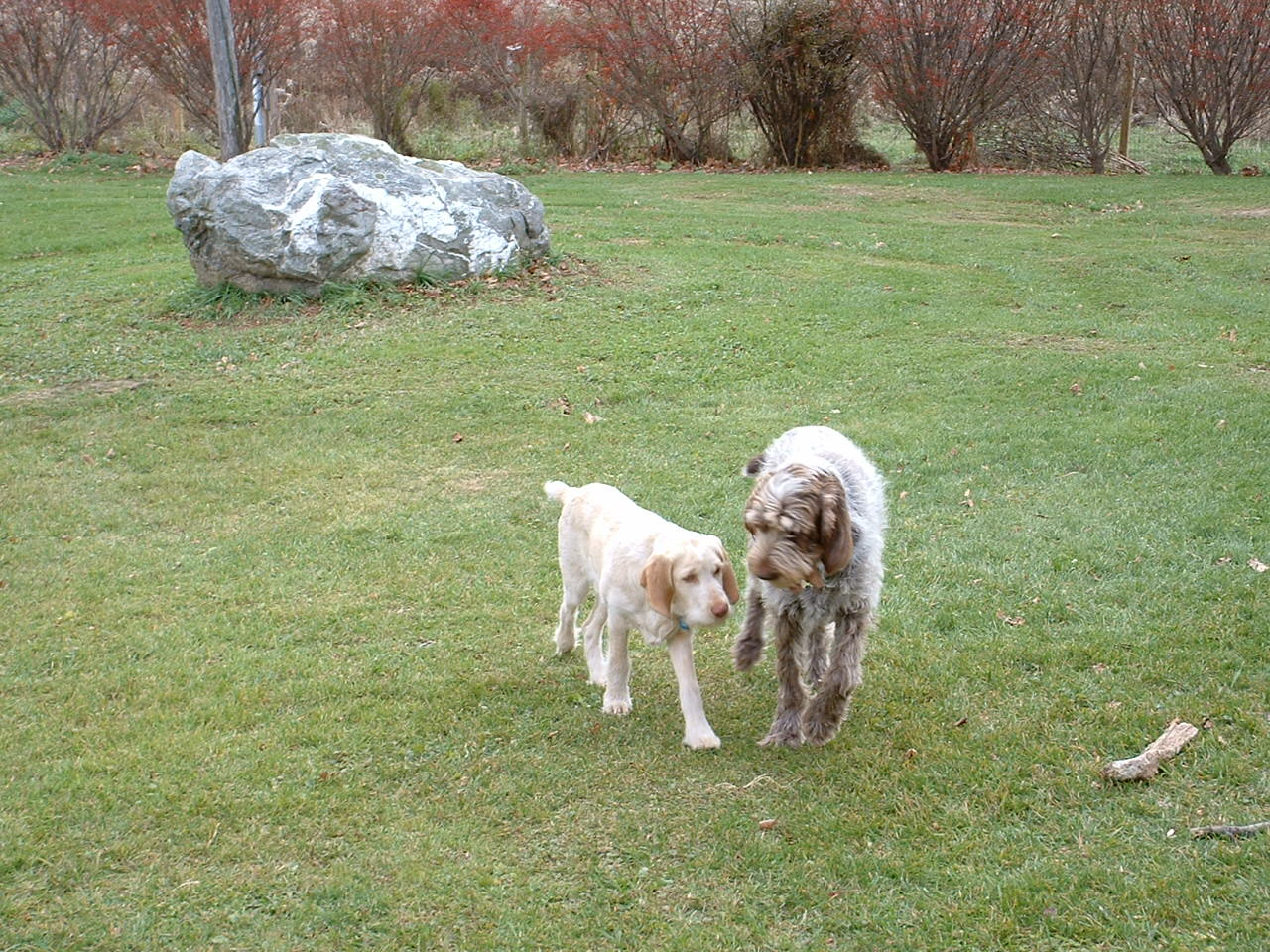
The first weeks were typical seeming new puppy weeks. Percy may have been drinking a little more than what would be considered normal, but it was summer, hot, and it was not enough to stand out. He house trained on schedule– our dogs have all been trained by about four months and Percy was no exception. Excessive drinking and accidents are  sometimes first indications of renal dysplasia, as well as lower activity levels, but through August I did not see anything out of the ordinary. We moved towards the end of that month and settled into our new house early in September. It was a happy time, and Nocci was beginning to see that Percy was actually a dog with whom he could scamper and wrestle.The weather was lovely and they spent a lot of time outdoors. Percy had an endearing way of running at top speed as soon as he caught sight of me coming out of the house or around the corner, from wherever he was in the yard– sometimes at a pretty great distance for a small pup– ears flapping and legs a-kilter, down hill or up. When it was down hill, he sometimes got carried away in his enthusiasm and legs unable to keep up with desire to reach me he ended tumbling in a comic puppy somersault. He also would keep close at my heels as we did the perimeter walk to check the fence or pick up poo, and when I was wearing my tall boots he would nip at the buckles as I walked– he was so quiet coming up behind me I often didn’t know he was there until I felt this tug at the top of my boots.

Early in the evening of September 15  Percy had his first seizure. I would eventually keep track of dates and times of all his seizures as if to make sense or try to control the uncontrollable. He was three and a half months old, and he went from sweetly napping just before suppertime to emitting an unearthly involuntary howl, his body contorting, stiffening and shaking, his head rattling with his little jaw clenched. I knelt over him, terrified. Fermat had had a series of epileptic-like seizures in the days before he died, and so seeing Percy in a similar state not only brought back the memory of Fermat dying but also made me think, illogically perhaps, that Percy too could be dying. The vet on call for our local practice told me that epilepsy could indeed appear in dogs so young but that it was unusual, and so doing some bloodwork to see what was happening would be a good idea. I had to travel for work the next day and had someone come to stay with the dogs, fearful that Percy would have another seizure in my absence and die. So it was the following day that I took Percy in to draw blood. Saturday the 19th was Spinoni Day, hosted by the breeders up in the Adirondacks, and we brought Percy and Nocci up to join dozens of other Spinoni, including nine of Percy’s littermates who were able to travel back, and other breeds, on a perfect nearly-autumn day.

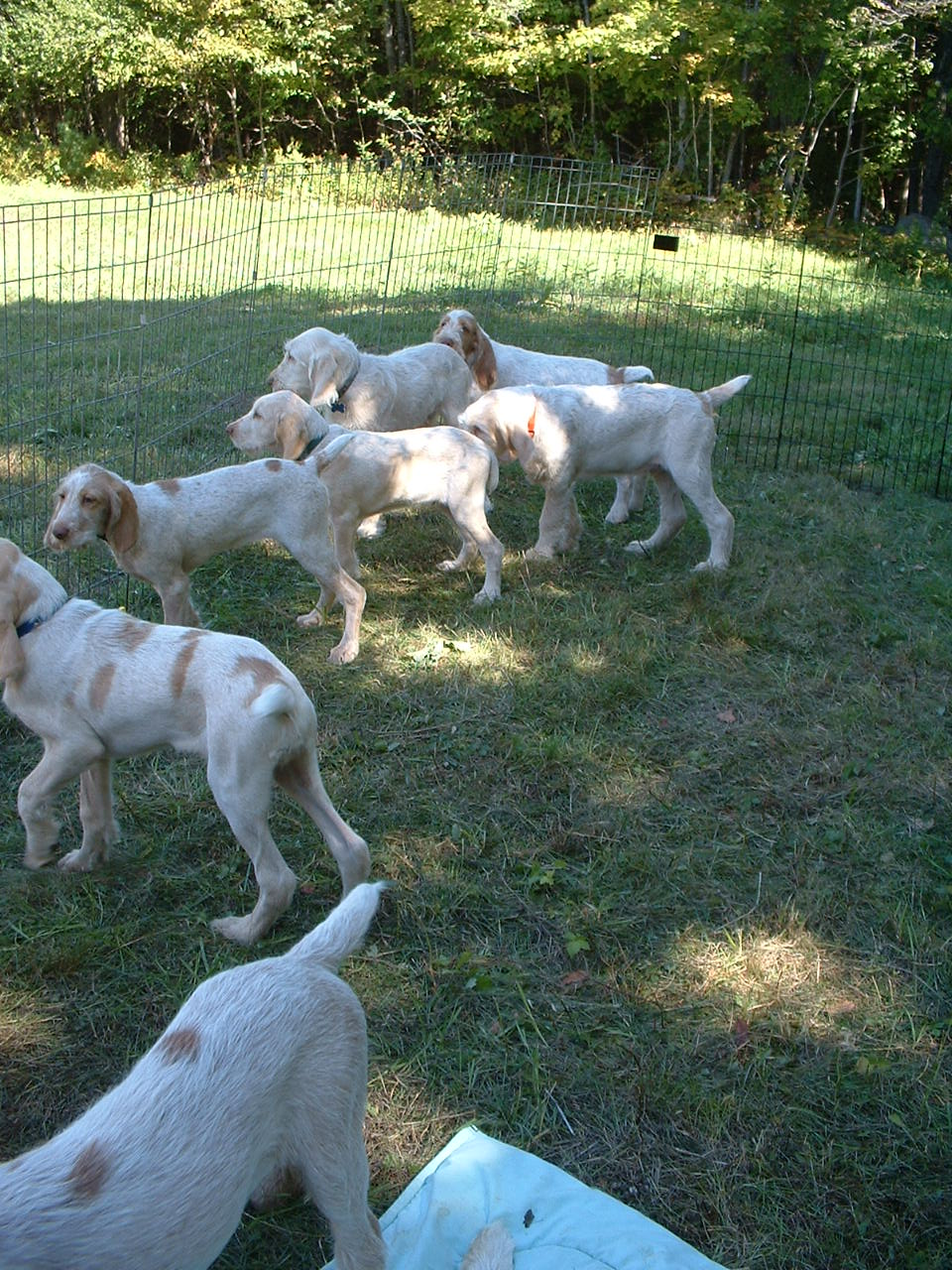
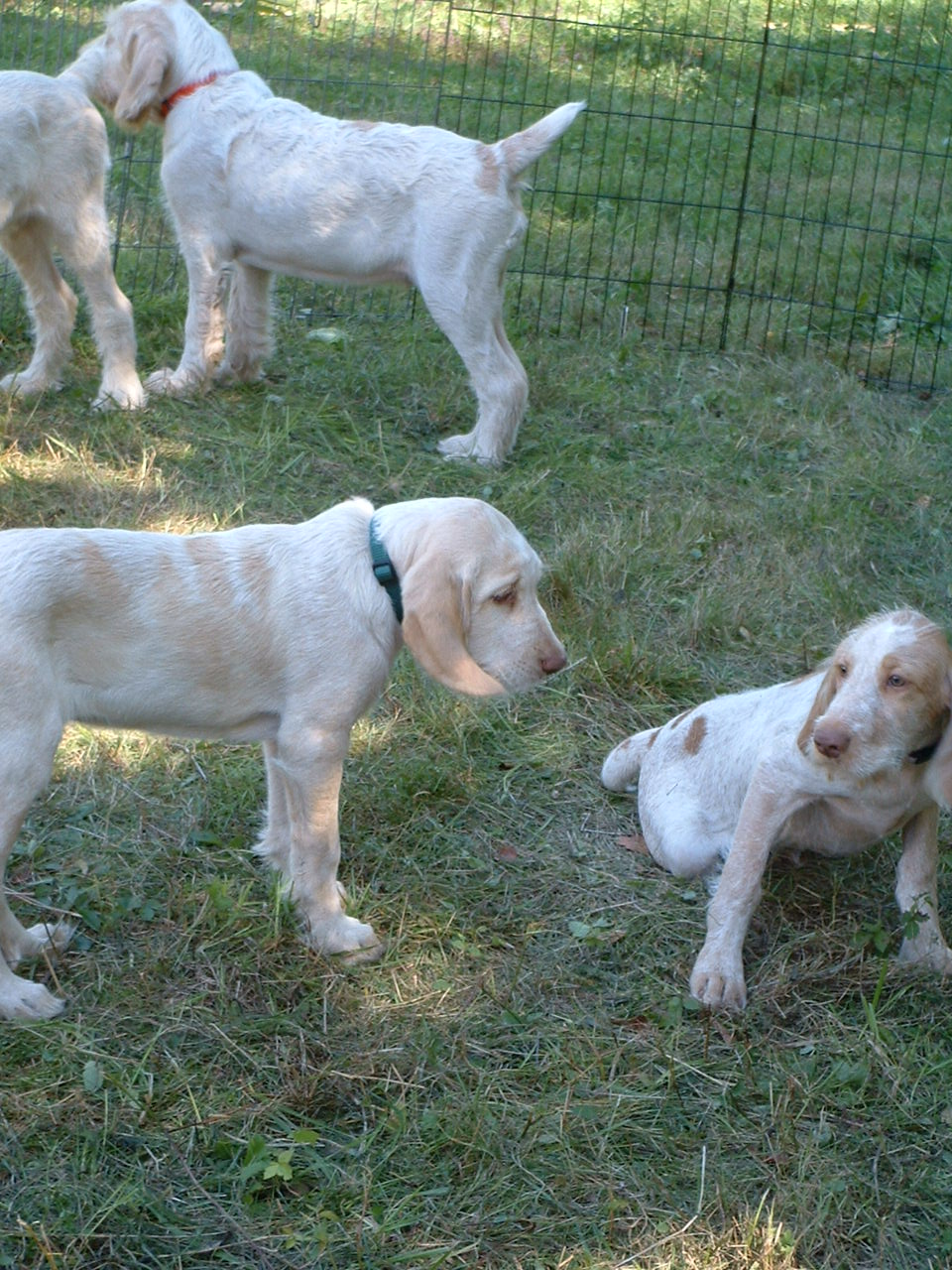
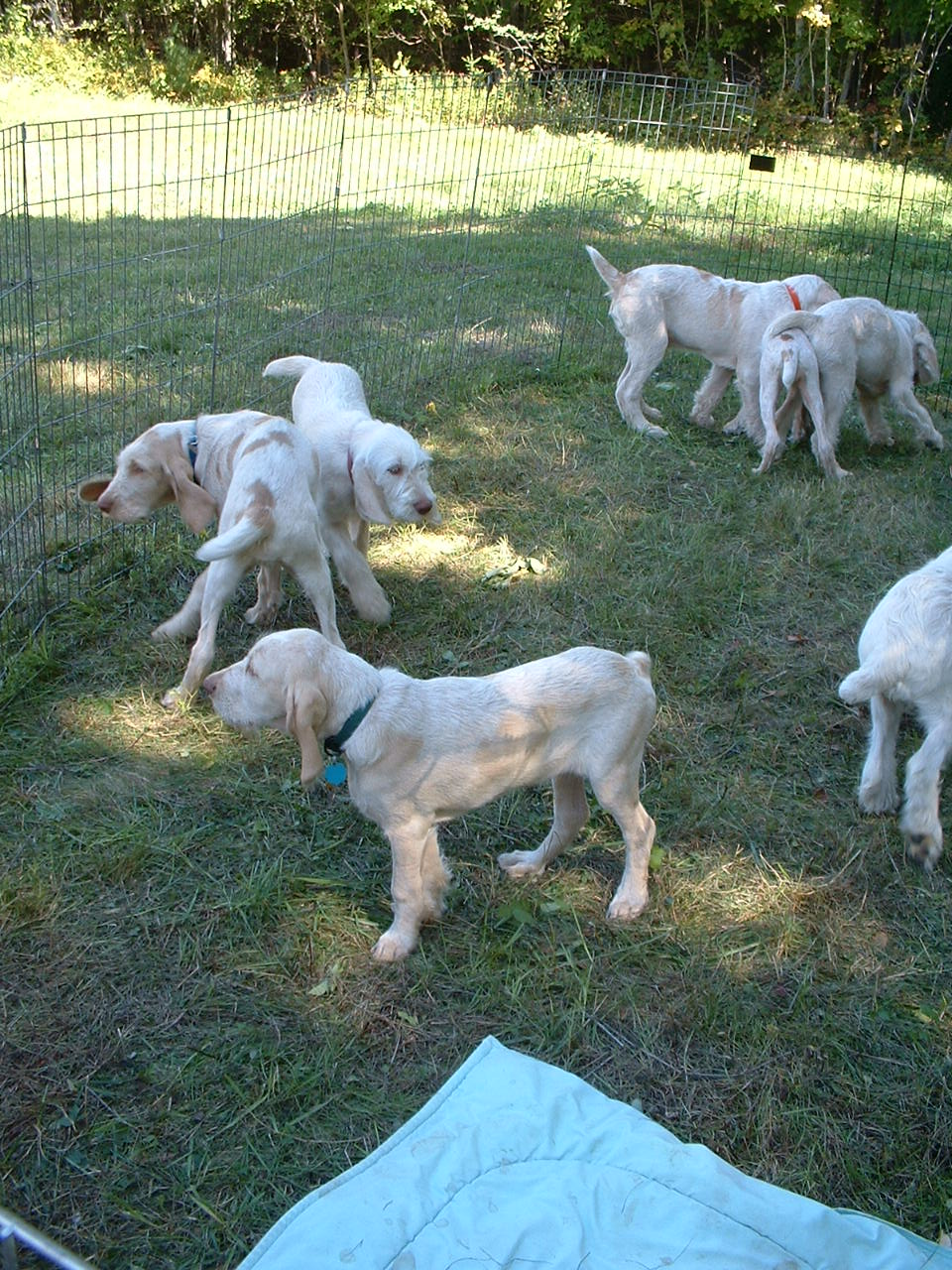
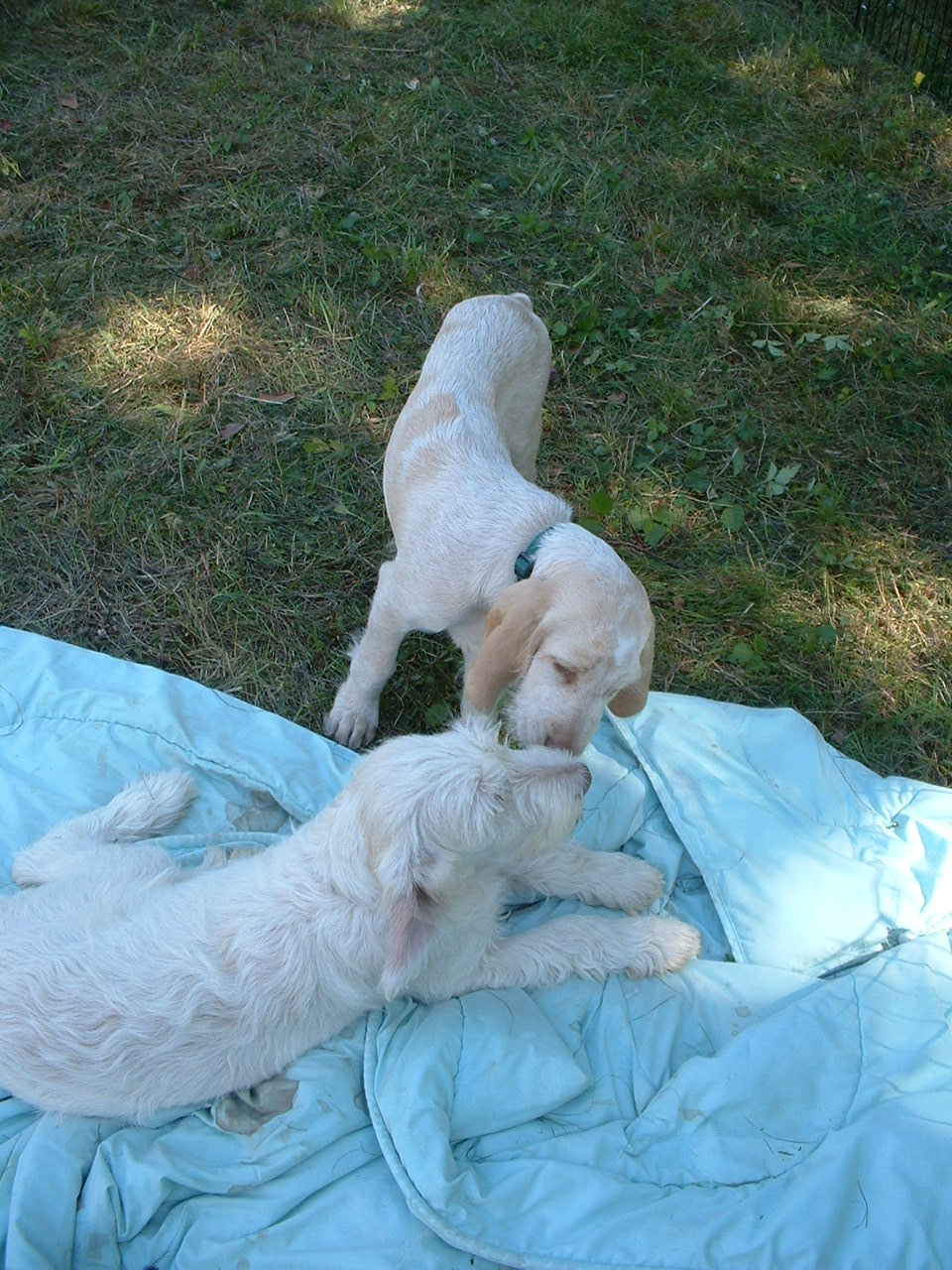
At that point, Percy had had just the one seizure; the breeders thought it could have been caused by the rabies vaccine he had the week prior– his mother had had a reaction to her rabies vaccine even at an older age. Watching him that day with his littermates and all the human attention, he seemed fine, though he did not want to be separated from me for very long. A big pen was set up for all the pups who were happy to loll with each other there, but Percy after some interaction seemed to look for me to take him out (below, Percy is pup with green collar).

On my way home late that afternoon I saw there was a message from our vet and it did not sound good. Speaking with him that evening he told me Percy’s bloodwork showed highly abnormal kidney functions, to a degree indicating an underlying abnormality. For me that is where one story ends and another begins.