spring 2012

Last fall, I learned of two Spinoni related to Percy who had kidney disease. They were both females, littermates whose grandmother was Percy’s great grandmother, making them something like second cousins to Percy. One had seemingly been fine and showed no symptoms or abnormalities, but died during spaying at around two years old; the autopsy showed she had almost no kidneys.  The second female showed symptoms by 12 months but she made it to an amazing 5 years old. She died in December 2011, and her owner submitted samples to the Broad Institute for analysis. Percy’s case, where he showed symptoms before he was four months old and died at 10 1/2 months, is more dramatic. But for all, the discovery of the disease was a shock and the early loss of the dogs heartbreaking. Although these dogs all lived within a few years of each other, were clearly related, and died young from kidney disease, no mention was made of possible heritable disease within their lines and no breeding of the likely carriers was curbed.

Three related dogs suffered from kidney disease within a few years of each other,  but still no dots were connected. Understandably, breeders don’t want to think a beloved, valuable animal carries a heritable disease. But without responsible realism these diseases will perpetuate and destroy segments of the population, not to mention causing the heartache of unsuspecting owners.

I’ve also learned that idiopathic epilepsy is not at all uncommon in Spinoni, with known cases throughout lines, though in some instances dogs have suffered only a few seizures in their lifetime. In Percy’s case, his seizures were likely related to his kidney failure; we will never know for sure.

If you have a dog with kidney disease and are reading this, please write to us at info@percyspage.com and share your story.
October 2009: diagnosis

It was the second week of October that he had the ultrasound, and the confirmation of the disease was all too visible on the screen. His kidneys were almost not there: there was water where there should have been mass. Seeing this and hearing it described was like a death sentence being handed to me for my adorable four-month old pup. I remember holding him in my lap and simply trying to hold myself together: I don’t cry in public but I could feel everything retract inside me into a protective mode, protective of him, of me. But there was no protection to be had. He would die from lack of kidneys, and all we could do would be to manage his diet and give him supplements to help what little kidneys he had do the job they were meant to do. It would only buy a little time.

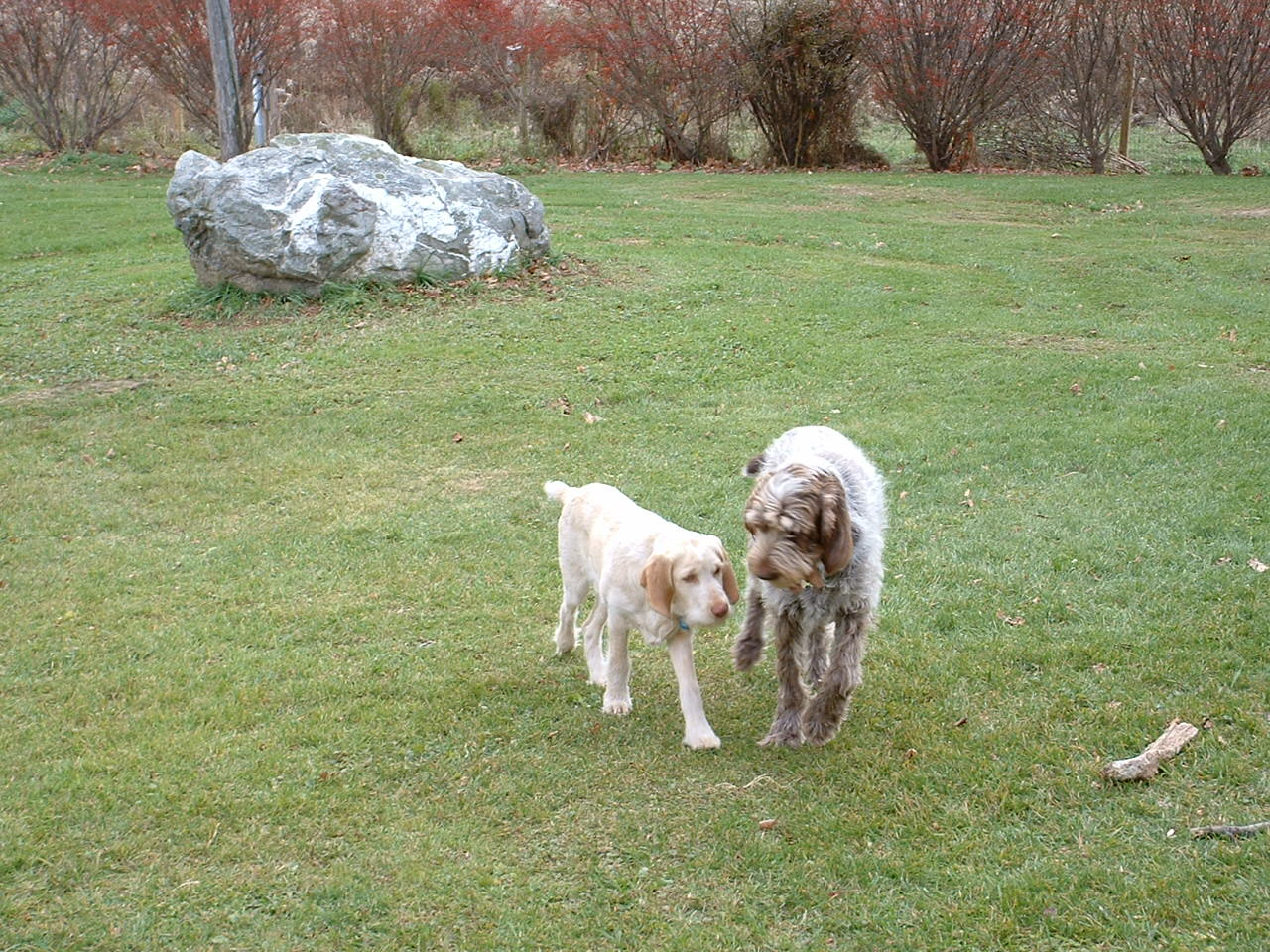
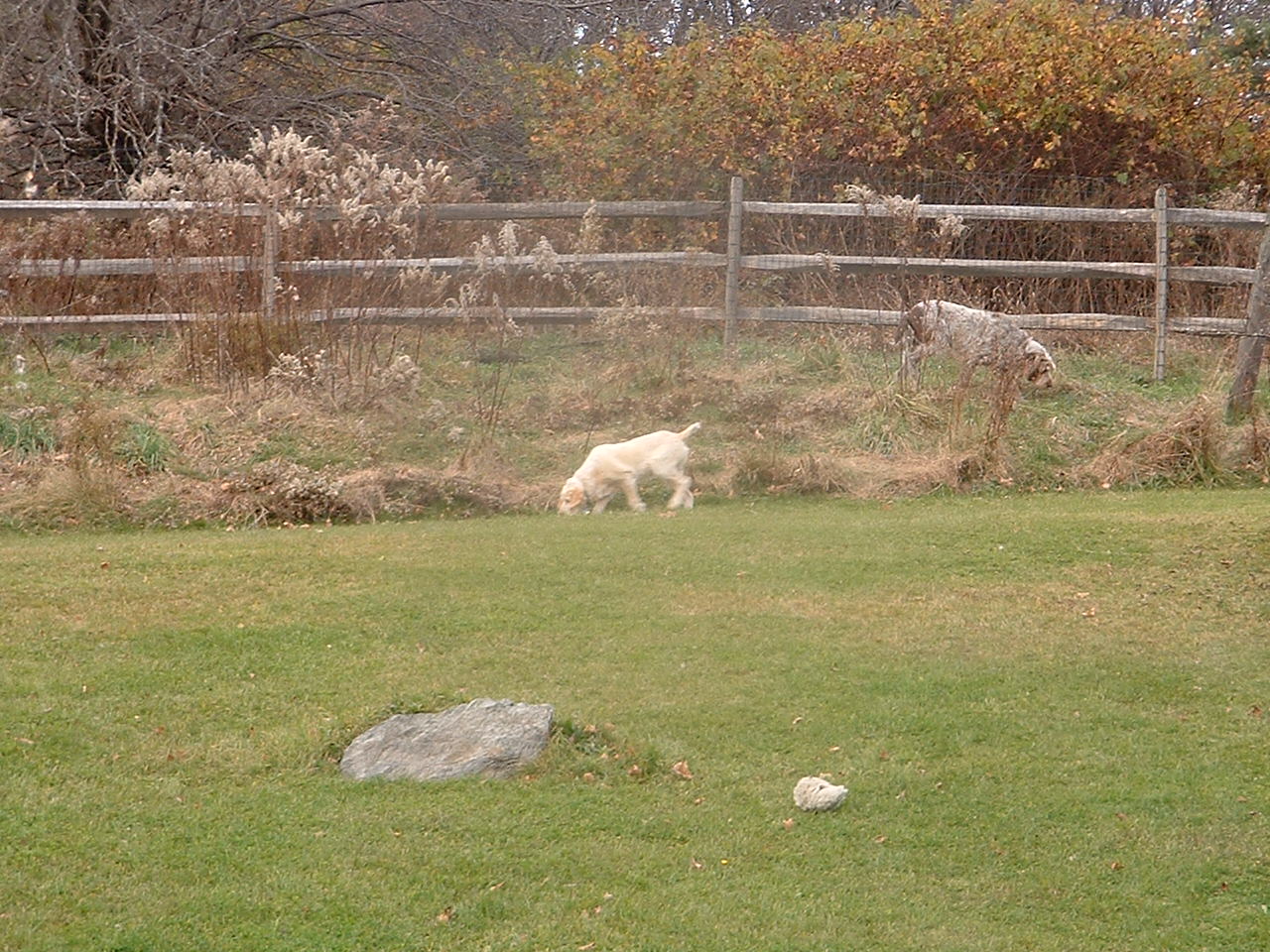
Yet he seemed like a puppy of that age would, playful with a good appetite, eating rabbit droppings in the yard with gusto. He and Nocci could graze for hours on them. Since the second seizure in September there had been no more, so I just sort of held my breath, knowing it was only a matter of time before things started to look worse.

Percy’s initial treatment consisted of a low-protein diet with supplements serving to bind phosphates and reduce blood toxins, as well as additional supplements for general health and to address the ancillary issues affecting him. Please see the treatment posts for details.


November 6 BUN 128, creatinine 3.4, phosphorus 11.2. In addition his sodium to potassium ratio had dropped from 27 in September (the low end of normal) to 23, just below normal. As a result the following week we did a test for Cushing’s, just in case, but it was negative.


One number would rise, another would go down, but they did not improve significantly.

September 2009: first seizures

As I describe in Percy’s World, the first sign that anything was amiss with Percy was an epileptic-like seizure he suffered early in the evening of September 15. He was exactly three and a half months old. I brought him in for bloodwork the 17th and by the 19th we knew his kidney functions were very abnormal. The following day, a Sunday, Percy suffered a second seizure, again in the evening while he was napping. It was never clear if the seizures were caused by the imbalance in his system due to the kidney disease, or if it could be a separate idiopathic epilepsy. But in terms of his kidneys, the next step was to do an ultrasound to see their morphology. Short of doing a biopsy of the kidney tissue this would give the most comprehensive diagnosis.

There was a delay of several weeks until the ultrasound was done, and in that time I was just in a state of suspended shock about Percy. The numbers could not lie, and they were so dramatically off as to be incontestably bad. But Percy, except for the two seizures, still seemed pretty normal– though I of course began to watch him more closely. Was he somewhat less active than our other pups had been? Was he really drinking more? He was gaining weight and growing the typical Spinone beard. Who could believe this bundle of sweet energy would have a severely limited lifespan?

Towards the end of the month I found drops of blood here and there on the floor and where Percy slept. I looked him over and found nothing external. Then I looked in his mouth, and found what appeared to be an ulcerated abscess on his left upper gum. It was red, inflamed, and bleeding just a little. Though I did not see any foreign body protruding, this was a not-yet four-month old puppy, so I thought he must have chewed a stick or something of that sort and a piece had gotten lodged in his gum. Of course, this was a weekend. Percy did not seem feverish or especially bothered by it, but given everything else that was going on it needed attention. I brought him to the clinic the next day but nothing beyond the ulcer was apparent, so we began a round of Clavamox. The ulcer healed, but a few months later there would be a reappearance.

September 17 Bloodwork results showing abnormal kidney functions: BUN 120, creatinine 3.3, phosphorus 11.6. Normal levels are considered within a range of 7-27 for BUN, .4-1.8 for creatinine , and 2.2-6.3 for phosphorus.